Red Rabbit Tom Clancy  
* * - - -
More Details

Jack Ryan's first days with the CIA may be the Pope's last days alive.

Disgrace J M Coetzee  
* * * * -
More Details

David Lurie is hardly the hero of his own life, or anyone else's. At 52, the protagonist of Disgrace is at the end of his professional and romantic game, and seems to be deliberately courting disaster. Long a professor of modern languages at Cape Town University College, he has recently been relegated to adjunct professor of communications at the same institution, now pointedly renamed Cape Technical University:Although he devotes hours of each day to his new discipline, he finds its first premise, as enunciated in the Communications 101 handbook, preposterous: "Human society has created language in order that we may communicate our thoughts, feelings and intentions to each other." His own opinion, which he does not air, is that the origins of speech lie in song, and the origins of song in the need to fill out with sound the overlarge and rather empty human soul. Twice married and twice divorced, his magnetic looks on the wane, David rather cruelly seduces one of his students, and his conduct unbecoming is soon uncovered. In his eighth novel, J.M. Coetzee might have been content to write a searching academic satire. But in Disgrace he is intent on much more, and his art is as uncompromising as his main character, though infinitely more complex. Refusing to play the public-repentance game, David gets himself fired—a final gesture of contempt. Now, he thinks, he will write something on Byron's last years. Not empty, unread criticism, "prose measured by the yard," but a libretto. To do so, he heads for the Eastern Cape and his daughter's farm. In her mid-20s, Lucy has turned her back on city sophistications: with five hectares, she makes her living by growing flowers and produce and boarding dogs. "Nothing," David thinks, "could be more simple." But nothing, in fact, is more complicated—or, in the new South Africa, more dangerous. Far from being the refuge he has sought, little is safe in Salem. Just as David has settled into his temporary role as farmworker and unenthusiastic animal-shelter volunteer, he and Lucy are attacked by three black men. Unable to protect his daughter, David's disgrace is complete. Hers, however, is far worse.

There is much more to be explored in Coetzee's painful novel, and few consolations. It would be easy to pick up on his title and view Disgrace as a complicated working-out of personal and political shame and responsibility. But the author is concerned with his country's history, brutalities, and betrayals. Coetzee is also intent on what measure of soul and rights we allow animals. After the attack, David takes his role at the shelter more seriously, at last achieving an unlikely home and some measure of love. In Coetzee's recent Princeton lectures, The Lives of Animals, an aging novelist tells her audience that the question that occupies all lab and zoo creatures is, "Where is home, and how do I get there?" David, though still all-powerful compared to those he helps dispose of, is equally trapped, equally lost.

Disgrace is almost willfully plain. Yet it possesses its own lean, heartbreaking lyricism, most of all in its descriptions of unwanted animals. At the start of the novel, David tells his student that poetry either speaks instantly to the reader—"a flash of revelation and a flash of response"—or not at all. Coetzee's book speaks differently, its layers and sadnesses endlessly unfolding. —Kerry Fried

Visual Fitness: 7 Minutes to Better Eyesight and Beyond David Cook  
* * - - -
More Details

Pilots have benefited from it.
Teachers have done it.
Runners have used it.
Computer workers need it.

Through trained behavioral optometrist David Cook's simple exercises and tests, the productive 7-minute-a-day program outlined in this breakthrough book works as a personal trainer for improving the brain-to-eye connection necessary to help poor eyesight sufferers to see deeper, longer, smaller, faster, to absorb more information, and to achieve a whole new outlook on life.

THIS BOOK HELPS ELIMINATE:

€"internet eyes"
€ mental fatigue
€ double vision
€ blurriness
€ physical exhaustion
€ poor hand-to-eye coordination
€ and headaches

AND IMPROVE:

€ peripheral and night vision
€ driving ability
€ athletics
€ dexterity
€ coordination
€ endurance
€ sleeping habits
€ and confidence

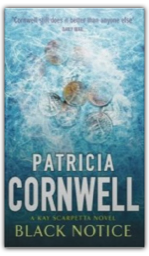
Black Notice Patricia Cornwell  
* * * - -
More Details

"Patricia Cornwell lights a fire under familiar characters—and sparks her hottest adventure in years," wrote People magazine about Point of Origin, the instant #1 bestseller by America's premier crime writer. "Evil always smolders when it seems to be doused," said The Atlanta Constitution. "Scarpettans know to keep their security systems armed until the next installment."

Now Cornwell delivers a high-stakes Kay Scarpetta novel with an intrigue that will take Kay an ocean's length away from home. The nightmare begins when a cargo ship arriving at Richmond's Deep Water Terminal from Belgium is discovered to be transporting a locked, sealed container holding the decomposed remains of a stowaway.

The autopsy performed by Chief Medical Examiner Dr. Kay Scarpetta initially reveals neither a cause of death nor an identification. But the victim's personal effects and an odd tattoo take Scarpetta on a hunt for information that leads to INTERPOL's headquarters in Lyon, France, where she receives critical instructions: go to the Paris morgue to receive forbidden, secret evidence and then return to Virginia to carry out a mission. It is a mission that could ruin her career.

In a story that careens across international borders, Black Notice puts Dr. Kay Scarpetta directly in harm's way and places her and those she holds dear at mortal risk.

"No one holds her head higher than Kay Scarpetta. She is for many readers the capable female writ large—a lightning rod for those who would destroy change at any price, yet a formidable champion because of it." —Patricia Holt, San Francisco Chronicle

The Empty Chair Jeffery Deaver  
* * * * -
More Details

From the bestselling author of The Bone Collector and Devil's Teardrop comes this spine-chilling new thriller that pits renowned criminalist Lincoln Rhyme against the ultimate opponent — Amelia Sachs, his own brilliant protege.

A quadriplegic since a beam crushed his spinal cord years ago, Rhyme is desperate to improve his condition and goes to the University of North Carolina Medical Center for high-risk experimental surgery. In a twenty-four hour period, the sleepy Southern outpost of Tanner's Corner has seen a local teen murdered and two young women abducted. And Ryhme and Sachs are the best chance to find the girls alive.

The prime suspect is a teenaged truant known as the Insect Boy, so nicknamed for his disturbing obsession with bugs. Rhyme agrees to find the boy while awaiting his operation. Rhyme's unsurpassed analytical skills and stellar forensic experience, combined with Sachs's exceptional detective legwork, soon snare the perp.

But Sachs disagrees with Rhyme's crime analysis and so ensues a battle of wits and forensics between Rhyme and Sachs, his best friend and soul mate.

The Stone Monkey Jeffery Deaver  
* * * * -
More Details

Forensics expert Lincoln Rhyme and his protégée Amelia Sachs have been recruited by the FBI to capture "the Ghost" — a homicidal immigrant smuggler. But when they corner him aboard a cargo ship, the bust goes disastrously wrong and the Ghost escapes. Now, he must eliminate the only witnesses — two families who jumped ship and vanished into Chinatown. Against a ruthless adversary, Lincoln and Amelia race to find the families before the Ghost can silence them...

Bleak House Charles Dickens  
* * * * -
More Details

NOW AVAILABLE - OVER 60 TITLES OF CHARLES DICKENS - ONLY $14.95

Boy in the Water Stephen Dobyns  
* * * ~ -
More Details

Although not as complex or as haunting as his 1997 novel Church of Dead Girls, Stephen Dobyns has produced a first-rate psychological thriller with Boy in the Water.

Bishop's Hill Academy in rural New Hampshire is a school in crisis. Once a highly regarded preparatory school for the rich and elite, it is now a dumping ground for troubled teens. The teachers are unqualified, unenthusiastic, and spend more time hitting the students than educating them. A new headmaster, Jim Hawthorne, enters the chaotic scene, but is immediately outcast from the tight-knit faculty. Hawthorne is obsessed with the idea of turning the school around—and we soon find out why. His family died in a fire purportedly set by a disturbed teenager back in San Diego. Mentally and physically scarred, Hawthorne sees Bishop's Hill as an opportunity to get back to "physical reality," and save some adolescent psyches. But it is his own mental state that is soon put to the test as he becomes the nucleus of a hate campaign and is forced to relive the terrible memories of the fire.

It seems that everyone in the school has a secret to hide—from the cook Frank LeBrun who enjoys placing sharp tacks in his recipes to Chip Campbell, a history teacher who has taken one too many liberties with the school's funds.

Dobyns paints a foreboding landscape of dilapidated buildings and neglected children—a place where a 15-year-old girl plots to kill her father, a place where teachers abuse students, a place where a young boy is found dead in a swimming pool. As a snowstorm cuts off the isolated community, the exiled headmaster is forced into a final showdown with the school's omnipotent evil.

Boy in the Water is an entertaining but ultimately disturbing read. —Naomi Gesinger