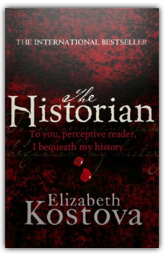

If your pulse flutters at the thought of castle ruins and descents into crypts by moonlight, you will savor every creepy page of Elizabeth Kostova's long but beautifully structured thriller The Historian.The story opens in Amsterdam in 1972, when a teenage girl discovers a medieval book and a cache of yellowed letters in her diplomat father's library. The pages of the book are empty except for a woodcut of a dragon. The letters are addressed to: "My dear and unfortunate successor." When the girl confronts her father, he reluctantly confesses an unsettling story: his involvement, twenty years earlier, in a search for his graduate school mentor, who disappeared from his office only moments after confiding to Paul his certainty that Dracula—Vlad the Impaler, an inventively cruel ruler of Wallachia in the mid-15th century—was still alive. The story turns out to concern our narrator directly because Paul's collaborator in the search was a fellow student named Helen Rossi (the unacknowledged daughter of his mentor) and our narrator's long-dead mother, about whom she knows almost nothing. And then her father, leaving just a note, disappears also.As well as numerous settings, both in and out of the East Bloc, Kostova has three basic story lines to keep straight—one from 1930, when Professor Bartolomew Rossi begins his dangerous research into Dracula, one from 1950, when Professor Rossi's student Paul takes up the scent, and the main narrative from 1972. The criss-crossing story lines mirror the political advances, retreats, triumphs, and losses that shaped Dracula's beleaguered homeland—sometimes with the Byzantines on top, sometimes the Ottomans, sometimes the rag-tag local tribes, or the Orthodox church, and sometimes a fresh conqueror like the Soviet Union.Although the book is appropriately suspenseful and a delight to read—even the minor characters are distinctive and vividly seen—its most powerful moments are those that describe real horrors. Our narrator recalls that after reading descriptions of Vlad burning young boys or impaling "a large family," she tried to forget the words: "For all his attention to my historical education, my father had neglected to tell me this: history's terrible moments were real. I understand now, decades later, that he could never have told me. Only history itself can convince you of such a truth." The reader, although given a satisfying ending, gets a strong enough dose of European history to temper the usual comforts of the closing words. —Regina Marler 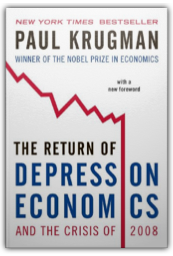
The New York Times bestseller: the Nobel Prize–winning economist shows how today’s crisis parallels the Great Depression—and explains how to avoid catastrophe. With a new foreword for this paperback edition. In this major bestseller, Paul Krugman warns that, like diseases that have become resistant to antibiotics, the economic maladies that caused the Great Depression have made a comeback. He lays bare the 2008 financial crisis—the greatest since the 1930s—tracing it to the failure of regulation to keep pace with an out-of-control financial system. He also tells us how to contain the crisis and turn around a world economy sliding into a deep recession. Brilliantly crafted in Krugman’s trademark style—lucid, lively, and supremely informed—this new edition of The Return of Depression Economics has become an instant classic. A hard-hitting new foreword takes the paperback edition right up to the present moment. . 
Written by popular author and .NET expert Jesse Liberty, this thoroughly updated tutorial for beginning to intermediate programmers covers the latest release of Microsoft's popular C# language (C# 3.0) and the newest .NET platform for developing Windows and web applications. |

Agnostic theologian Bernard Walsh has a professional interest in heaven. But, when he travels to Hawaii with his father, Jack, it is not in quest of a vacation paradise; it is to visit Jack's dying, estranged sister. The hand of fate and family tensions frustrate the planned reunion, however. And surrounded by quarrelling honeymooners, girls looking for Mr Right, a freeloading anthropologist, and assorted tourists all determinedly pursuing their humdrum visions of paradise, Bernard finds Waikiki more like purgatory. Until, that is, he stumbles upon something he had given up hope of finding - the astonishing possibility of love... 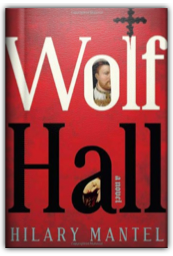
In the ruthless arena of King Henry VIII’s court, only one man dares to gamble his life to win the king’s favor and ascend to the heights of political power 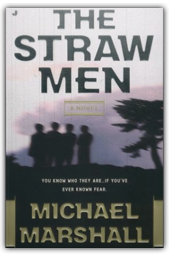
The first in an explosive trilogy of thrillers from Michael Marshall. This book takes the serial-killer book ands adds a chilling new dimension, combining pace, narrative and a genuinely disturbing conspiracy story. The Straw Men. They kill people. Any people. Sarah Becker is the fifth girl to be abducted by this maniac. Judging from the state of the bodies that have been found, her long hair will be hacked off and she will be tortured. She has about a week to live. Former LA homicide detective John Zandt has an inside track on the perpetrator - his own daughter was a victim two years ago. But the key to Sarah's whereabouts lies with Ward Hopkins, a man with a past so secret not even he knows about it. His parents have just died in a car accident, but they leave Ward an enigmatic message that leads him to question everything he once believed to be true. 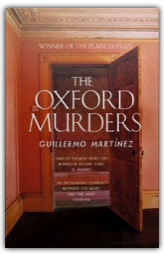
Two mathematicians must join forces to stop a serial killer in this spellbinding international bestseller 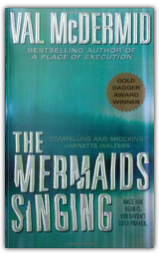
This was the summer he discovered what he wanted—at a gruesome museum of criminology far off the beaten track of more timid tourists. Visions of torture inspired his fantasies like a muse. It would prove so terribly fulfilling. 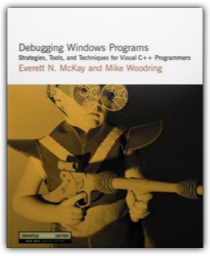
(Pearson Education) Shows readers how to prevent bugs by taking advantage of the Visual C++ development tools and writing code in a way that makes certain types of bugs impossible. Provides specific solutions to the most common debugging problems. Softcover. DLC: Debugging in computer science. |

Karsten Strøbæk
Collection Total:
225 Items
225 Items
Last Updated:
Aug 11, 2010
Aug 11, 2010

 Made with Delicious Library